How to Know If Therapy Is Right for You
You do not have to be in crisis to benefit from therapy.
People seek therapy for many different reasons. You might be struggling with anxiety or depression, adjusting to a major life change, having difficulties in a relationship, or noticing patterns in your life that you would like to better understand. You may also simply feel like something is off, even if you cannot quite put it into words.
If you have been wondering whether therapy could be helpful, here are some signs it may be worth considering.
You Feel Like Your Emotions Are Becoming Harder to Manage
Everyone experiences stress, sadness, worry, anger, and other difficult emotions. But when those feelings become overwhelming, persistent, or begin interfering with everyday life, additional support can help.
You might notice that you are worrying more than usual, feeling easily overwhelmed, having difficulty concentrating, becoming more irritable, or struggling to enjoy things you normally do.
Therapy can help you better understand what you are experiencing and develop strategies for responding to difficult emotions in healthier and more effective ways.
The Same Patterns Keep Showing Up
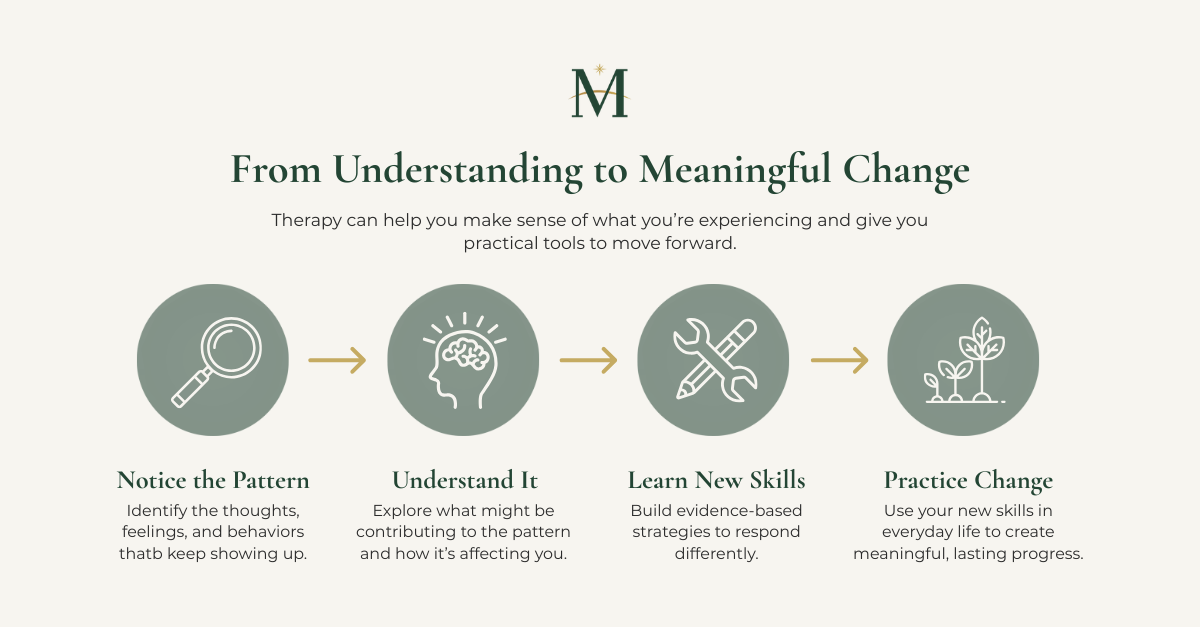
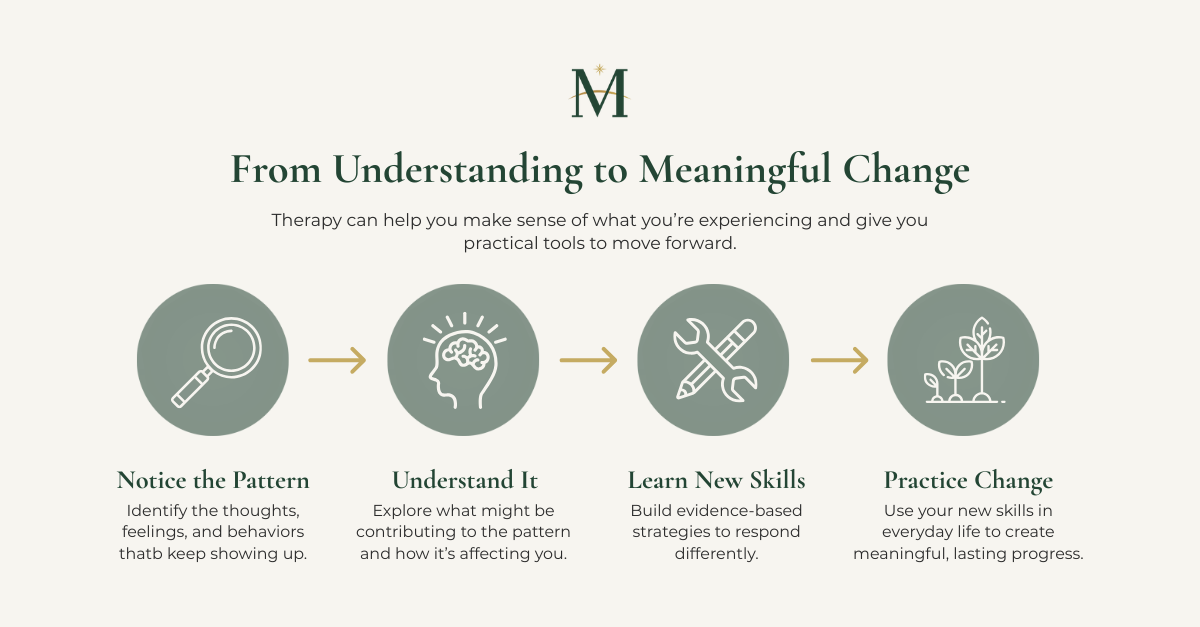
Sometimes the reason to consider therapy is not one major problem, but a pattern that keeps repeating.
Maybe you find yourself getting stuck in the same relationship conflicts. You avoid certain situations because they make you anxious. You repeatedly doubt your decisions or seek reassurance from others. Or you know that a particular behavior is not helping you, but changing it on your own has been difficult.
Therapy can help identify the thoughts, emotions, and behaviors that may be contributing to these patterns. More importantly, it can give you practical tools for changing them.
Something Is Interfering With Your Daily Life
One useful question to ask yourself is: Is this affecting the way I want to live my life?
Mental health concerns can show up in many areas, including work, school, relationships, sleep, parenting, social activities, and everyday routines.
For example, anxiety might cause you to avoid situations you would otherwise enjoy. Intrusive thoughts might take up significant time and attention. Low mood might make everyday responsibilities feel much more difficult than they used to.
You do not need to wait until a problem becomes severe before seeking help. Addressing concerns earlier can give you an opportunity to understand what is happening and begin making changes.
You're Going Through a Major Change
Therapy is not only for treating a mental health condition. It can also provide support during periods of transition.
Starting college, becoming a parent, changing careers, moving, ending a relationship, experiencing grief, or navigating changes within your family can bring up complicated emotions even when the change itself is positive.
Having a dedicated space to process those experiences can make transitions feel more manageable.
You've Tried to Make Changes on Your Own
Most people try to solve problems themselves before considering therapy. You may have talked with friends or family, read about what you are experiencing, listened to podcasts, changed your routine, or simply tried to push through it.
Sometimes those strategies help. Sometimes they only get you so far.
A therapist can offer something different: an outside perspective combined with professional training and evidence-based strategies designed to address specific concerns.
You Want to Understand Yourself Better
You do not necessarily need to have a specific diagnosis or problem to benefit from therapy.
Some people begin therapy because they want to better understand themselves, improve their relationships, become more confident in their decisions, establish healthier boundaries, or develop new ways of responding to stress.
Therapy can provide a structured space to explore your thoughts, feelings, behaviors, and goals with someone trained to help you make sense of them.
What If I'm Still Not Sure?
It is completely reasonable to have questions about whether therapy is right for you, especially if you have never been to therapy before.
You do not need to have everything figured out before your first appointment. Part of a therapist's job is helping you understand what you are experiencing, identify what you would like to change, and determine what kind of support may be helpful.
The first few sessions are also an opportunity to see how you feel about your therapist. Feeling comfortable with your provider and confident in their approach is an important part of the process.
If you’re still unsure about starting therapy, the American Psychological Association offers additional information about psychotherapy and what to expect.
Learn more about psychotherapy from the American Psychological Association
Finding the Right Kind of Therapy Matters
Therapy is not one-size-fits-all. Different concerns may benefit from different treatment approaches, which is why finding a therapist with appropriate training and experience matters.
At Meridian, our clinicians use evidence-based treatments, including Cognitive Behavioral Therapy (CBT), Dialectical Behavior Therapy (DBT), Acceptance and Commitment Therapy (ACT), and Exposure and Response Prevention (ERP), among other approaches.
Treatment is personalized based on your individual needs, concerns, and goals. You do not need to know which type of therapy you need before reaching out. We can help you determine an appropriate place to start.
Taking the First Step
Deciding to try therapy does not mean something has to be seriously wrong. It can simply mean that there is something in your life you would like help understanding, managing, or changing.
If you have been wondering whether therapy might be helpful, having an initial conversation with a mental health professional can be a good place to start.
Meridian Practice offers in-person therapy in Rochester and Buffalo, New York, as well as telehealth services for clients in New York, Maine, Massachusetts, and Georgia. Clients can typically begin therapy within one week of reaching out.
Ready to learn more? Contact Meridian to get connected with a therapist who fits your needs.

What Makes Meridian Different?
At Meridian, finding the right therapist is about more than simply being matched with someone who has availability. We focus on connecting clients with clinicians who have the training and expertise to address their specific needs.
Our therapists use evidence-based approaches, meaning treatment is informed by research and proven clinical methods rather than a one-size-fits-all approach. Care is personalized to each client, with clear goals and practical strategies that can be applied outside of the therapy room.
We also believe high-quality therapy should feel human. Our clinicians balance clinical expertise with warmth, collaboration, and genuine connection, creating an environment where clients feel understood while actively working toward meaningful change.
Meridian brings together specialized expertise, evidence-based treatment, and individualized care so clients can feel confident in both their therapist and the treatment they receive.

The Story Behind Meridian
Dr Wadsworth meridian practice
Meridian Practice was founded by Dr. Lauren Wadsworth, PhD, ABPP, with a goal that is both professional and deeply personal: to make high-quality, evidence-based mental health care easier to access.
Dr. Wadsworth grew up in a rural community, an experience that gave her a deep appreciation for the strengths of close-knit communities as well as an understanding of the unique challenges people can face when seeking specialized services outside of larger cities. It inspired her desire to give back and help ensure that where someone lives does not determine their ability to access high-quality, evidence-based mental health care.
Today, that mission is at the heart of Meridian. At a time when therapist shortages and long waitlists can make finding care difficult, particularly in Western New York and communities surrounding Rochester and Buffalo, Meridian is working to make connecting with a skilled therapist easier and faster. Clients can typically begin therapy within one week of reaching out.
Meridian’s approach is personal, practical, and grounded in evidence. Therapy is tailored to each individual, creating space to explore thoughts, feelings, and behaviors while developing skills to make meaningful progress toward their goals. Our providers are trained in evidence-based approaches including Cognitive Behavioral Therapy (CBT), Dialectical Behavior Therapy (DBT), Acceptance and Commitment Therapy (ACT), and Exposure and Response Prevention (ERP), among others.
Meridian offers in-person services in Rochester and Buffalo, New York, as well as telehealth throughout New York, Maine, Massachusetts, and Georgia.
For Dr. Wadsworth, Meridian is about more than expanding access to therapy. It is about bringing the kind of care she believes every community deserves: care that is trustworthy, evidence-based, accessible, and rooted in genuine connection.